
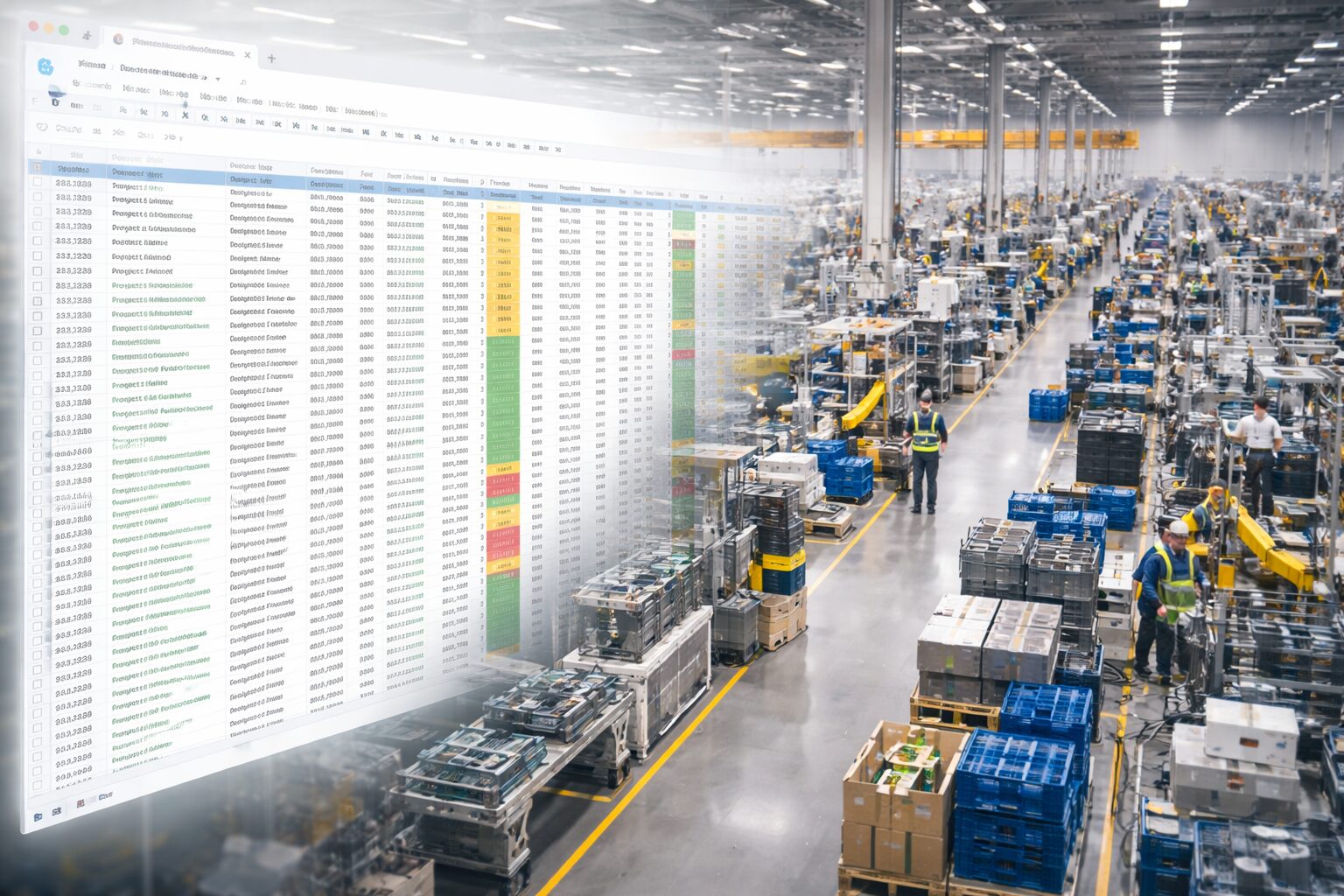
When I became the first CIO at a specialty materials manufacturer with 16 sites across three continents, I inherited 11 separate ERP systems.
Every month, someone was manually stitching together a $2 million demand forecast in Excel. That spreadsheet was the most expensive application in the company — and nobody called it one.
My first instinct wasn’t AI. It was plumbing.
We consolidated fragmented data into a single warehouse. We automated dashboards that had previously been built manually every Monday morning. We cleaned up the master data that had been copied and pasted between systems for years.
None of that was glamorous. None of it made a press release.
But here’s what it did: it made AI possible.
Once the data lived in one place, we could finally see patterns. Yield variations across production lines. Demand signals that had been invisible when locked inside 11 disconnected systems. Quality correlations that no human could have spotted in a spreadsheet — because no human had ever seen all the data at once.
The real AI use case wasn’t the chatbot the board had read about. It was predictive yield optimization on the production floor: a sales forecast that no human had ever been able to estimate before (later on, AI did so with 80% accuracy).
And it emerged not from a vendor pitch or an innovation lab. It emerged when I walked the factory floor and asked a plant manager one question:
“What takes you the longest every week?”
His answer was a spreadsheet. It’s almost always a spreadsheet.
Here’s what I’ve learned across 25 years and four industries: the highest-ROI AI projects don’t come from the top of the org chart. They come from the middle — from the people who spend 40 hours a week on work that a well-trained model could do in 40 minutes.
But you’ll never find those projects in a conference room. You have to walk the floor. You have to sit with the team that’s been doing it manually and ask what’s painful about it. And then you have to be honest about whether the infrastructure exists to support the AI, or whether the plumbing needs to come first.
In parallel, we increased the company’s NIST cybersecurity score by over 150 points in nine months. Not because cybersecurity was an AI project — but because security unlocks networking, data sharing, and data sharing unlocks AI. You can’t build intelligence on a foundation you don’t trust.
Every manufacturer has a $2M spreadsheet.
Most just haven’t found it yet.
What’s yours?
ManufacturingAI #CIO #DigitalTransformation #AI #ProcessOptimization #FractionalCIO #DataStrategy #Cybersecurity
Discover more from SSTRAIT – Strategic Solutions in AI and IT
Subscribe to get the latest posts sent to your email.